Strange Ball
Strange Ball 3D model
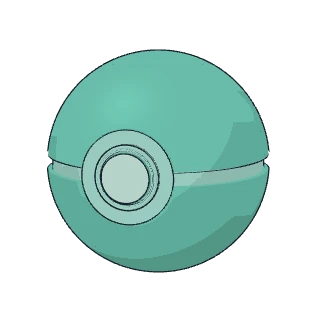
Back to the 3D Poké Ball viewer
More modern Poké Balls in 3D
Poké Ball 3D model · Great Ball 3D model · Ultra Ball 3D model · Master Ball 3D model · Premier Ball 3D model · Heal Ball 3D model · Net Ball 3D model · Nest Ball 3D model · Dive Ball 3D model · Dusk Ball 3D model · Timer Ball 3D model · Quick Ball 3D model · Repeat Ball 3D model · Luxury Ball 3D model · Safari Ball 3D model · Fast Ball 3D model · Friend Ball 3D model · Lure Ball 3D model · Level Ball 3D model · Heavy Ball 3D model · Cherish Ball 3D model · Love Ball 3D model · Moon Ball 3D model · Dream Ball 3D model · Beast Ball 3D model · Sport Ball 3D model · GS Ball 3D model
Where to find it
No covered game’s map records where to get this item yet.
Pokémon that match the Strange Ball
30 Pokémon list the Strange Ball as a colour match for their normal or shiny form.
- Psyduck ball guide
- Machop ball guide
- Teddiursa ball guide
- Chimecho ball guide
- Snorunt ball guide
- Spheal ball guide
- Sealeo ball guide
- Walrein ball guide
Browse every Pokémon matching the Strange Ball
Browse Poké Balls
Poké Ball · Great Ball · Ultra Ball · Master Ball · Premier Ball · Heal Ball · Net Ball · Nest Ball · Dive Ball · Dusk Ball · Strange Ball · Timer Ball · Quick Ball · Repeat Ball · Luxury Ball · Safari Ball · Fast Ball · Friend Ball · Lure Ball · Level Ball · Heavy Ball · Cherish Ball · Love Ball · Moon Ball · Dream Ball · Beast Ball · Sport Ball
Game reference details
Category: event items
Catch rate
The Strange Ball is never thrown: it only shows on Pokémon moved in from another game, so it has no catch rate effect.
Games that catch outside battle — Let’s Go, Legends: Arceus and Legends: Z-A — use their own systems and are not listed.
How the game calculates it
Generation V to IX
The game multiplies the HP the Pokémon has lost (3 × max HP M minus 2 × current HP H, over 3 × max HP) by its catch rate C, the ball’s multiplier B and the status bonus S (×2.5 asleep or frozen, ×1.5 paralysed, burned or poisoned). If X reaches 255 the Pokémon is caught. Otherwise the ball shakes: each shake passes with the chance Y ÷ 65536, and all four must pass, so the chance P is roughly (X ÷ 255) to the power ¾. Generation V uses the power ¼ and three shakes; later games add a few extra factors to X, such as low-level and badge bonuses.
The Strange Ball never enters this formula; it is shown so you can compare how the battle games decide a catch.
What changed between generations
- Generation I: no multiplier — the ball limits the first random number and sets the HP factor.
- Generation II: the ball changes the catch rate itself; one random number decides.
- Generation III and IV: the ball becomes a separate multiplier, and four shakes decide.
- Generation V: fractions in steps of 1/4096, three shakes, critical captures and dark grass.
- Generation VI to IX: four shakes again; later games add low-level, badge and difficulty factors.