Pokéblock Recipes in Ruby, Sapphire & Emerald
Make effective Gen 3 Pokéblocks with solo recipes, Nature preferences and Feel planning. Find the Case, Blender Master and Emerald Berry Crush.
Published
- Games
- Original Ruby, Sapphire and Emerald
- You need
- Pokéblock Case, one Berry per blend and space in the Case.
- Solo recipes
- Use the blender with three NPC partners in the Lilycove City Contest Hall.
- Permanent limit
- Sheen caps at 255 and cannot be reduced. Plan before feeding.
Good Pokéblocks raise the condition your Contest Pokémon needs before its permanent feeding limit fills up. Start with a specialist for one category, grow matching Berries, and compare the finished block’s flavor strength against its Feel. A high Level can help, but a low Feel can be just as valuable.
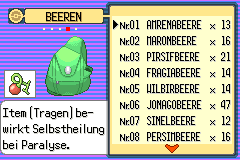
The recipes below work with NPC partners, so a second cartridge is unnecessary for ordinary blending. They give calculated examples at 100 RPM, not a guaranteed result from every attempt. For Berry sources and seed stock, use the all-Berries guide. For the move round and the five portraits, follow the Contest guide and Contest paintings guide.
Where to get the Pokéblock Case
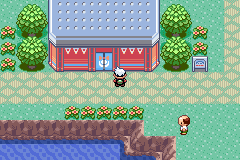
In Ruby and Sapphire, speak to the little girl inside the Contest Hall in Slateport City. In Emerald, obtain the Pokéblock Case from reception in the Contest Hall in Lilycove City. These are different locations: an Emerald player searching the old Slateport hall instructions will not find the same setup.
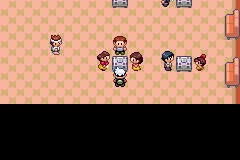
Bring the ingredient you want to use and select the blender with three NPC partners. You contribute one Berry; the three partners contribute theirs. Their choices depend on your ingredient. You do not need to carry the complete four-Berry recipe yourself, and another table with fewer partners produces a different result.
How to make Pokéblocks
- Choose your target condition Match the Contest category to its flavor in the table below. Use a Pokémon that has not already filled its Sheen meter.
- Choose one ingredient Use the ordinary recipe while building your crop, or plant a wife-gift Berry for the stronger recipe. Sit with the three NPC partners and submit one copy of your chosen Berry.
- Time A at your marker Press A as the rotating pointer reaches your marker. Accurate hits help the blender build speed. Watch the pointer rather than pressing continuously, and adjust as it accelerates.
- Check before feeding Read the finished block’s Level and Feel in the Case. Level is its strongest flavor; Feel is the amount of Sheen it adds. A block can carry a second condition gain that its Level alone does not show.
| Flavor | Condition | Single-flavor color |
|---|---|---|
| Spicy | Cool | Red |
| Dry | Beauty | Blue |
| Sweet | Cute | Pink |
| Bitter | Smart | Green |
| Sour | Tough | Yellow |
Color is a quick description, not a full quality score. Multiple flavors produce additional colors; any flavor above 50 makes a Gold Pokéblock. Identical ingredients can produce a weak Black block, so human players should coordinate different Berry choices. For planning, compare the useful condition gain with Feel instead of judging by color alone.
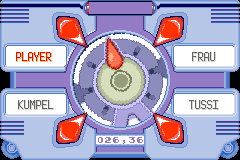
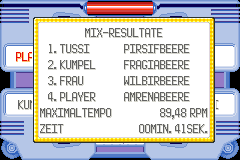
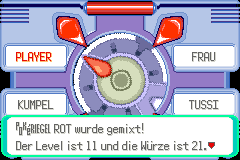
Pokéblock recipes in Ruby, Sapphire and Emerald
Use these at the three-NPC blender in Lilycove City. At 100 RPM the ordinary ingredients give 25 in the main condition, 12 in a secondary condition and Feel 22. Their matching wife-gift upgrades give 51, 12 and Feel 32. Your actual speed changes the strengths, so check the block you made before using a numerical feeding plan.
| Your Berry | NPC ingredients | Condition gains; Feel |
|---|---|---|
| Tamato Berry | Cheri Berry + Pecha Berry + Rawst Berry | Cool 25, Smart 12; Feel 22. |
| Cornn Berry | Chesto Berry + Rawst Berry + Aspear Berry | Beauty 25, Tough 12; Feel 22. |
| Magost Berry | Pecha Berry + Aspear Berry + Cheri Berry | Cute 25, Cool 12; Feel 22. |
| Rabuta Berry | Rawst Berry + Cheri Berry + Chesto Berry | Smart 25, Beauty 12; Feel 22. |
| Nomel Berry | Aspear Berry + Chesto Berry + Pecha Berry | Tough 25, Cute 12; Feel 22. |
| Your Berry | NPC ingredients | Condition gains; Feel |
|---|---|---|
| Spelon Berry | Cheri Berry + Pecha Berry + Rawst Berry | Cool 51, Smart 12; Feel 32. |
| Pamtre Berry | Chesto Berry + Rawst Berry + Aspear Berry | Beauty 51, Tough 12; Feel 32. |
| Watmel Berry | Pecha Berry + Aspear Berry + Cheri Berry | Cute 51, Cool 12; Feel 32. |
| Durin Berry | Rawst Berry + Cheri Berry + Chesto Berry | Smart 51, Beauty 12; Feel 32. |
| Belue Berry | Aspear Berry + Chesto Berry + Pecha Berry | Tough 51, Cute 12; Feel 32. |
The upgrade’s higher Feel is worthwhile here: 51 useful points for 32 Feel is more efficient than 25 for 22. If your goal is one category, use the matching stronger ingredient once your crop can support it. Avoid filling Sheen with miscellaneous blocks while waiting for the right Berry.
Here is the stronger Cute recipe in actual play. Six Watmel blends with three NPC partners yielded sweet strength 50 or 51, secondary spicy strength 11 or 12, and Feel 32. We fed them to the same Quiet Barboach after its earlier Olive block: even with its disliked sweet flavor, Cute reached 255 at Sheen 214. A Nature that likes sweet would use this recipe more efficiently; always check the finished blocks before committing the remaining appetite.
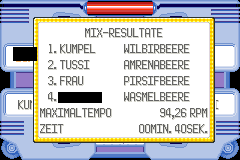
Pokéblock Feel and Sheen
Each condition caps at 255. Sheen also caps at 255, and there is no way to lower it in these games. A Pokémon at 255 Sheen refuses further feeding. If it starts below 255, the final accepted block still applies its full condition gain even when the added Feel pushes Sheen to the cap.
For a clean plan, begin at zero condition and zero Sheen and use blocks with the same displayed values. The example below uses a Nature with no flavor preference, so the listed strengths are the actual gains. Already-fed Pokémon need a fresh calculation from their current values.
| Blocks fed | Beauty | Sheen |
|---|---|---|
| 10 × Cornn recipe | 250 | 220 |
| 11 × Cornn recipe | 255 | 242 |
| 12 × Cornn recipe | 255; no further Beauty benefit | 255; feeding now closed |
| 5 × Pamtre recipe | 255 | 160 |
The eleven-block ordinary plan already reaches maximum Beauty. A twelfth adds the recipe’s secondary Tough gain but closes feeding. Decide whether that secondary gain serves your Contest plan before spending the remaining space. A dedicated Pokémon for each category makes this decision easier than trying to make one Pokémon excel in all five.
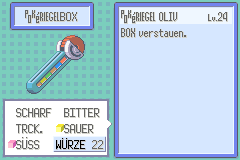
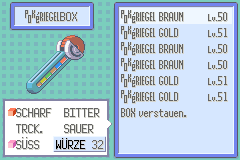
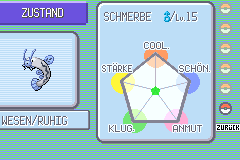
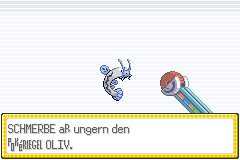
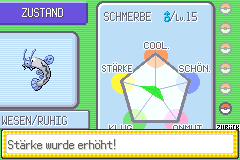
A real feeding example: this Barboach has Quiet Nature, which dislikes sweet. The stored Olive block supplies sweet 12, sour 24 and Feel 22. Its actual result is Cute +11, Tough +24 and Sheen +22. Check the following preference table before choosing a batch for your specialist.
Pokéblock Nature preferences
Nature can change a flavor gain by about ten percent, rounded to a whole point, without changing Feel. The game compares the block’s liked-flavor strength with its disliked-flavor strength. If the liked flavor is stronger, only that flavor is boosted; if the disliked flavor is stronger, only that flavor is reduced. A tie changes neither. Do not automatically raise one and lower the other on the same block.
For example, Mild likes dry and dislikes sour. The Cornn Berry recipe has dry 25 and sour 12, so dry wins: Beauty becomes 28 while Tough stays 12, with Feel still 22. This is why a suitable Nature can save feeding space. The full preference table follows.
| Nature | Likes | Dislikes |
|---|---|---|
| Hardy | None | None |
| Lonely | Spicy | Sour |
| Brave | Spicy | Sweet |
| Adamant | Spicy | Dry |
| Naughty | Spicy | Bitter |
| Bold | Sour | Spicy |
| Docile | None | None |
| Relaxed | Sour | Sweet |
| Impish | Sour | Dry |
| Lax | Sour | Bitter |
| Timid | Sweet | Spicy |
| Hasty | Sweet | Sour |
| Serious | None | None |
| Jolly | Sweet | Dry |
| Naive | Sweet | Bitter |
| Modest | Dry | Spicy |
| Mild | Dry | Sour |
| Quiet | Dry | Sweet |
| Bashful | None | None |
| Rash | Dry | Bitter |
| Calm | Bitter | Spicy |
| Gentle | Bitter | Sour |
| Sassy | Bitter | Sweet |
| Careful | Bitter | Dry |
| Quirky | None | None |
Why the ingredients change the result
The blender first combines all five flavor totals. Each flavor is reduced by the next flavor in the cycle spicy → dry → sweet → bitter → sour → spicy. Negative results become zero and introduce a small penalty to the remaining positive flavors. The achieved blender speed then scales the strengths. Feel comes from the ingredients’ average smoothness, reduced by the number of participants.
That explains two useful habits: ingredients that look strong separately can cancel each other, and changing the partner count changes Feel. At the three-NPC blender, the Cornn Berry recipe has raw totals spicy 0, dry 30, sweet 10, bitter 10, sour 10. Cancellation leaves dry 20 and sour 10, with one negative flavor imposing a one-point penalty. At 100 RPM, the resulting 19 and 9 become 25 and 12. Its average smoothness gives Feel 22.
Blender Master in Emerald
The Blender Master is an Emerald feature tied to an occasional post-Hall-of-Fame TV announcement. Read the broadcasts to learn when he is visiting Lilycove City, watch the active-day news, then enter the Contest Hall. He takes the place of the partner at a one-NPC blender and helps the machine reach high speeds. Winning a set number of Contests does not summon him.
His two-person session uses different ingredients and Feel from the three-NPC recipes. With Pamtre Berry, his ingredient is Cornn Berry: at 100 RPM the result is Beauty 51, Cute 25 and Feel 48. Higher speed can improve the strength, but this example already shows why a Gold block or a famous partner alone does not guarantee the best Beauty-per-Feel ratio.
Berry Crush in Emerald
Berry Crush makes Berry Powder, not Pokéblocks. In Emerald, obtain the Powder Jar from the powder-exchange clerk in the Slateport City market. On original hardware, Berry Crush needs a Wireless Adapter connection with another player; it is not an NPC alternative to the blender. Ruby and Sapphire do not offer this minigame.
Use the Pokémon Center’s wireless multiplayer facilities to gather compatible players, each contributing a Berry. Press A during crushing and coordinate the timing for a better result. The powder goes into the Jar and can be exchanged at the market. Keep your last seed copy: crushing consumes the submitted Berry just as blending does.
| Item | Powder required |
|---|---|
| Energy Powder | 50 |
| Energy Root | 80 |
| Heal Powder | 50 |
| Revival Herb | 300 |
| Protein, Iron, Carbos, Calcium, Zinc, HP Up | 1,000 each |
| PP Up | 3,000 |
Pokéblock recipes, Feel and Sheen questions
- Can I reset Pokéblock Sheen after feeding?
- No. Choose the category and recipe before feeding. EV-reducing Berries do not reset Contest condition or Sheen.
- How do I make Pokéblocks for Feebas?
- Use dry-flavored blocks to raise Beauty and check the Nature’s preference before feeding. The Feebas and Milotic guide covers the evolution requirement; the Cornn and Pamtre recipes here supply the ingredients and feeding plan.
- Why did I get a Black Pokéblock?
- Repeated identical ingredients and unproductive flavor combinations can produce Black blocks. Use the listed three-NPC recipe rather than replacing ingredients at random; human partners should choose different Berries.
- Do GBA multiplayer instructions also apply on Switch?
- The solo NPC recipes describe original game mechanics. Multiplayer blending, Berry Crush and TV timing on a Switch edition depend on that edition’s confirmed features. A GBA link or Wireless Adapter setup cannot establish how a Switch version connects.